
The Position
Seventy Miles Past the End of the Highway
US1 ends in Key West, but the Florida Keys do not. The chain carries on west for another seventy miles as a scatter of sand keys, shoals and reef and it finishes at the Dry Tortugas.
The National Park Service puts the distance at approximately 70 miles west of Key West and states plainly that there are no roads to the park: cars cannot reach it and no bridge connects it to the rest of the Keys.
That single fact governs everything else about a visit. Every arrival is either a boat arrival or a water landing, every departure has to be planned around weather in open Gulf water and the number of people on the island on any given day is small.
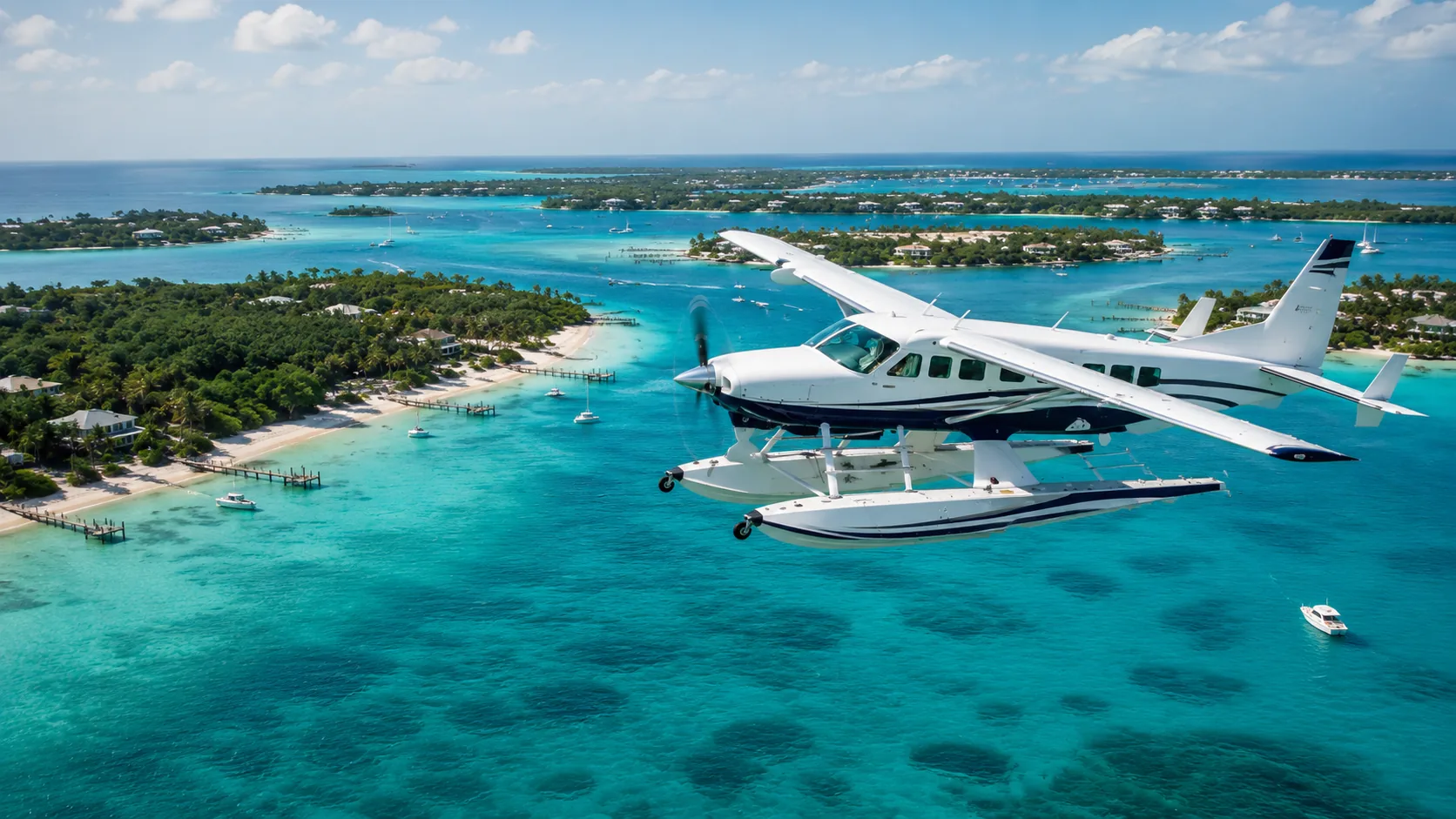
Ferry and seaplane visitors arrive at Garden Key, which is where Fort Jefferson sits. If you are weighing a seaplane charter from the Florida Keys against a runway aircraft, this is the one destination in the corridor where the choice is not a preference. It decides whether the trip is possible at all.
Ask About Flying to the Tortugas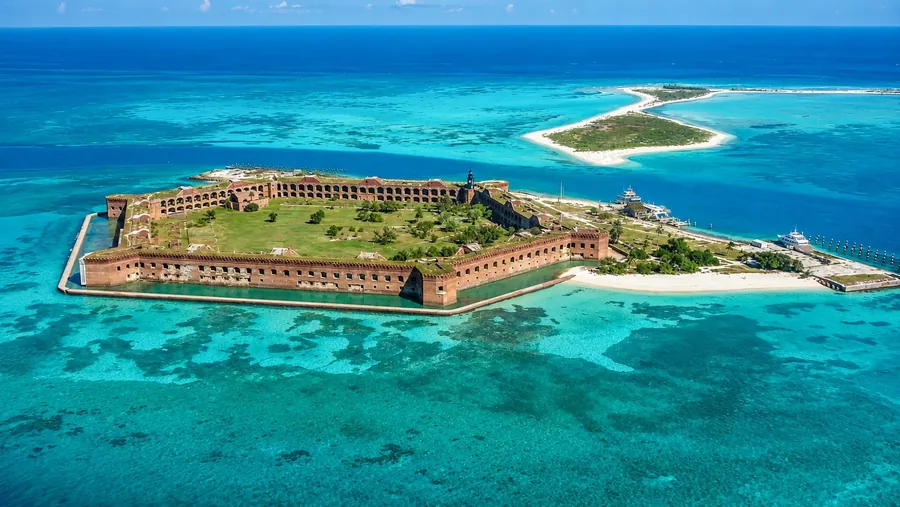
Access
Four Ways Into Dry Tortugas National Park
The Park Service lists them as ferry, seaplane, private boat and permitted charter. They are not variations of one another. They differ in how long you get on the island, what the day costs you in travel time and who is allowed to carry you.
- The daily ferry. The high-volume route from Key West and the one most visitors take. It is a long day on the water in each direction and the crossing is the part that weather cancels.
- The concession seaplane. Sold by the seat, operated by the single holder of the National Park Service concession. Short flight, half day or full day on the island and capacity is limited by the Park Service rather than by the aircraft.
- A private boat. Your own vessel or a charter yacht. This is the option with no time limit on the island and the one that pairs with a yacht itinerary out of Key West.
- A permitted charter. Operators holding a permit with the park for diving, snorkelling, fishing, birdwatching and similar. The Park Service publishes the list and it is longer than most visitors expect.
A private seaplane arrival sits alongside these rather than inside them and it carries its own entrance pass bought in advance. That is the category Crown Air works in and it is the one that is being confirmed before we sell it.
The Rule Nobody Explains
What the Seaplane Concession Means for Your Trip
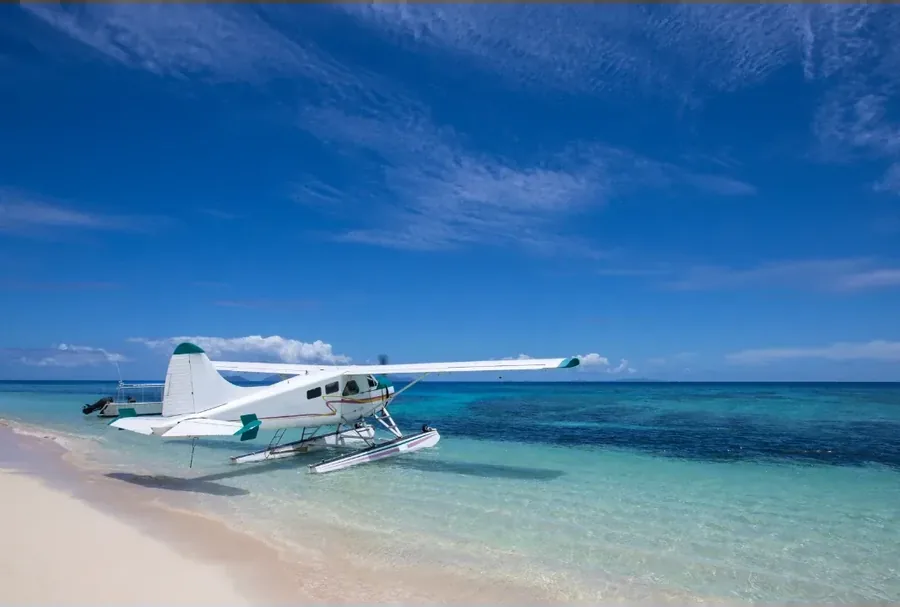
Most pages about flying to the Dry Tortugas leave out the part that decides your booking, so here it is first. The daily seaplane service that sells seats into the park runs under a single National Park Service concession. One operator holds it. That is a federal contract, not a market position and no amount of chartering changes it.
What the Park Service does recognise separately is arrival by private seaplane. Its own fees page tells private boaters and visitors arriving by private seaplane to buy a digital entrance pass in advance through Recreation.gov, which is a different route from a concession seat and it lists permitted tour operators as a further option alongside the daily ferry and seaplane tours.
So the honest answer has three parts rather than one and which part applies to a given party depends on how the flight is structured.
Crown Air is a charter broker, so the aircraft is always flown by the certificated operator we place you with. Landing inside the park runs on a National Park Service concession and Key West Seaplane Adventures holds it, so any other aircraft needs a Special Use Permit from the park.
We say what is possible today rather than what sounds better and for many parties that is a flight to Key West plus the onward leg.
Talk to the Charter DeskThe Destination
Fort Jefferson on Garden Key
The Dry Tortugas are a cluster of seven islands of coral and sand and Fort Jefferson is the central feature of the group. The Park Service calls it the largest masonry fort in the western hemisphere.
It was nearly thirty years in the making, from 1846 to 1875 and it was never finished nor fully armed. It was also never attacked. What survives is a vast brick wall standing straight out of shallow water, visible from the air long before the aircraft is near it.
For a visitor the fort is not a museum with an itinerary. It is a structure you walk through, a moat wall you walk around and a beach on the far side. The snorkelling starts immediately off the shore of Garden Key rather than a boat ride away, which is unusual for a reef destination and is the reason a short island stay is still worth the crossing.
The other islands carry the rest of the park. Loggerhead Key is the largest of the seven and holds the lighthouse.
Bush Key sits alongside Garden Key, the sand between them shifts and the Park Service closes it for part of the year for ground nesting birds, so what you can walk to depends on the month you come. The park has no visitor services in the ordinary sense and does not accept cash.
The Route West
What the Flight Crosses on the Way
The seventy miles between Key West and the Tortugas are the reason people call this the best low-level flight in Florida. Flown low, the water reads like a map. These are the named features along the route and each is a reason to look out of the window rather than a stop:
- The Flats. A broad shallow bank west of Key West, a few feet deep and part of the Florida Keys National Marine Sanctuary. Sharks, rays and turtles show up from the air on a clear day because the water is too shallow to hide anything.
- Ballast Key. The last privately held island before the sanctuary water opens up and the only one under the route with a house on it.
- The Marquesas Keys. A ring of mangrove islands roughly twenty five miles out. The circular shape is unmistakable from the air and invisible from a boat.
- The Quicksands. The deeper sand ground west of the Marquesas and the salvage area where the Spanish galleon Atocha was worked. Wrecks in this stretch sit shallow enough to read from the air.
- Rebecca Shoal. The last marked hazard before the park and the point where the water changes colour again on the run in to Garden Key.
None of this is visible from a ferry deck and none of it is reachable by road. It is the strongest argument for arriving by air rather than by water and it holds whether or not the aircraft lands inside the park.
Getting There by Air
Flying From Key West, Miami and Fort Lauderdale
Key West is the natural jumping-off point and it is the shortest water crossing to the park. Most guests reach Key West first, either as the destination in its own right or as the last stop before the Tortugas. From South Florida that leg is a seaplane charter from Miami or, where a runway suits the party better, a small plane charter into Key West International.
Which aircraft fits is a real question rather than a sales one. A seaplane buys you water arrival and the low-level route west. A small plane buys you range, weather margin and baggage. A private jet charter buys you speed from further north and then hands the last leg to something smaller.
For a party arriving from the Bahamas the crossing is longer and clears customs on the Florida side first. We say which of the four fits before anyone books and the answer is sometimes that the day does not work at all.
Compare Aircraft for This Route
On the Island
What There Is to Do Once You Land
- Fort Jefferson itself. You walk it rather than tour it. The parade ground, the casemates, the second tier and the top of the wall, plus the moat wall you can walk right around. Allow more time than you think for the wall, because it is where the view of the reef is.
- Snorkelling straight off the beach. The coral and the old coaling piers are immediately off the shore of Garden Key, so there is no boat leg between landing and swimming. That is rare in the Keys and it is the reason a half day here is still a real day.
- Loggerhead Key. The largest of the seven islands and the one with the lighthouse. It is a separate landing and not part of a standard Garden Key stop, so if you want it, it has to be planned into the flight rather than added on the day.
- Birds. The park is one of the best known birding sites in North America and the reason serious birdwatchers charter at all. Spring migration is the season and there are Park Service permitted birding operators.
- Camping and the one restriction that surprises people. Garden Key has campsites, but the Park Service limits camping transportation to private vessel, permitted tour guides or the commercial ferry. A seaplane arrival is a day trip by definition. If your party wants to stay the night, the aircraft is the wrong way in and we will say so.
None of this needs a guide and most of it needs nothing but water and shade. Whatever goes on board for the day, snorkelling equipment included, is counted into the same weight and balance as the baggage, so we ask what you are bringing before the day is confirmed.
The Day Itself
How a Day at the Tortugas Actually Runs
The arithmetic of the day is the part worth understanding before you choose how to travel, because the distance does not change and the island does not have a hotel. Everything is a round trip from Key West on the same date and the only variable you control is how much of the day you spend crossing and how much you spend on the island.
By water the crossing dominates. It is roughly seventy miles of open Gulf in each direction, it runs to a fixed schedule and it is the leg that weather cancels.
By air the crossing is short enough that the island stops being a logistics problem and starts being a destination, which is why the seat-based seaplane service exists at all and why its capacity is limited by the Park Service rather than by the aircraft.
A private flight changes a third thing that neither option offers: the departure time is yours. That matters here more than on most routes, because light and water clarity over the Flats and the Marquesas are best early and because a party that wants the fort without the crowd wants to be there when the ferry is not.
The park is sold as a morning, an afternoon or a full day and a chartered aircraft into Key West sets its own departure around whichever of those you take.
What does not change with any of them: there is no fuel, no food and no shop on the island, the park takes no cash and everything you want in the afternoon has to be on board when you leave Key West. Parties that treat it like a beach club day out are the ones who have a difficult afternoon.
Timing
When to Go and When the Crossing Does Not Work
- Wind is the deciding factor. Not rain. The Tortugas sit in open water with no shelter and both a boat crossing and a water landing are governed by sea state. A bright day with a strong breeze is a worse day here than an overcast calm one.
- Winter fronts. Cold fronts push through the Straits through the winter months and bring the wind with them. They pass in a day or two, which is why a flexible date is worth more at this destination than at any other in the Keys.
- Summer heat and afternoon storms. The summer pattern is calm mornings and convective storms later in the day. It is the strongest argument for an early departure rather than a late one.
- Nesting season. Parts of the park close for months for ground nesting birds. It changes what you can walk to rather than whether you can come and it is the one restriction people find out about on the day instead of before.
- Book the date, plan the alternative. Every serious operator into this park briefs a fallback, because the honest answer on a marginal day is that the landing does not happen. A charter can move the date. A ferry seat and a concession seat in season often cannot.
We say before you book which of these applies to your date and we would rather move a flight than fly a party into a day that will disappoint them. One limit is hard and has nothing to do with comfort: water landings run only from 30 minutes after sunrise to 30 minutes before sunset, so nothing on floats arrives in the dark.
Before You Go
Park Fees, Rules and What to Bring
- Entrance pass. The standard pass is $15.00 per person. An America the Beautiful pass covers it. Visitors arriving by private boat or private seaplane are told to buy the digital pass in advance through Recreation.gov rather than on arrival.
- The park is cashless. It does not accept cash at all. That catches people out more often than the fee itself.
- Nothing is sold on the island. No food, no fuel, no shop beyond the Park Service counter. Water, lunch and anything you want in the afternoon comes with you on the aircraft.
- Seasonal closures. Parts of the fort and neighbouring Bush Key close for months at a time for nesting birds and for structural work. What is open on your date is worth checking the week before rather than the month before.
- Everything is protected. It is a national park: no spearfishing, no lobster, no collecting coral or shells. Drones are banned in United States national parks and that ban includes licensed operators, so any aerial photography here is flown from the aircraft, never from a drone.
Weight and baggage are not a fixed allowance per head on a float aircraft. It is payload limited, so passenger weights, bags and fuel go through one calculation before the day is confirmed.
Plan the Rest of the Trip
Planning the Rest of the Trip Around Dry Tortugas
By aircraft
- Seaplane charter from Miami
- Seaplane charter from the Florida Keys
- Seaplane charter from Fort Lauderdale
- Seaplane charter from West Palm Beach
- Seaplane charter to the Bahamas
- small plane charter from Miami
- small plane charter from the Florida Keys
- Private jet charter from Miami
- Private jet charter from Fort Lauderdale
- Helicopter charter from Miami
- Helicopter charter from the Florida Keys
Cargo and logistics
Questions
Dry Tortugas Questions, Answered
Can you fly a seaplane to Dry Tortugas National Park?
Yes, the park is reachable by seaplane and for many visitors it is the only practical way to see it in a day. The National Park Service lists ferry, seaplane, private boat and permitted charter as the four ways in and there are no roads.
What matters for a booking is which of those categories your flight falls into: the daily service that sells individual seats into the park runs under a single Park Service concession held by one operator, while arrival by private seaplane is a separate category with its own entrance pass bought in advance.
How far is Dry Tortugas from Key West and how long does the flight take?
The Park Service puts the park at almost 70 miles west of Key West. It is the continuation of the Florida Keys past the end of US1 and the next land west of it is Mexico.
Flight time depends on the aircraft and on the wind on the day, so we quote it from the operator flying you rather than from an average and it is confirmed before departure.
Can I charter a private seaplane to Fort Jefferson?
Fort Jefferson stands on Garden Key, which is where both ferry and seaplane visitors arrive, so a flight to the park is a flight to the fort. Whether a given charter may land inside park water depends on the permission the operator holds and that is the part most pages skip.
We confirm it for your specific party and date before anything is booked and if the landing is not available we will say so and offer the overflight or a Key West arrival instead.
What does it cost to enter the park and can I pay on arrival?
The standard entrance pass is $15.00 per person and an America the Beautiful pass covers it. You cannot pay in cash: the park does not accept it. Visitors arriving by private boat or private seaplane are told to buy the digital pass in advance through Recreation.gov, so it is arranged before departure rather than at the dock. The park fee is separate from the cost of the flight.
Can you fly from Miami or Fort Lauderdale to Dry Tortugas?
Key West is the jumping-off point for the park, so a flight from South Florida is normally planned in two parts: the leg into Key West and the crossing west.
The first leg is a seaplane, a small plane or a jet depending on your party and your baggage and we recommend which one fits rather than selling one by default. The same applies coming the other way from the Bahamas, where the crossing clears customs on the Florida side first.
Can I bring a pet on the flight?
Yes, pets travel in the cabin with you. The one thing we ask is that you tell us at the enquiry, with the type of animal and its weight, so the seating and the load plan are right from the start.
Charter Desk
Request a Charter Flight to Dry Tortugas
Tell us your date, your party size and where you are starting from. We come back with what is actually available for that day, which aircraft fits and whether the landing inside the park is on the table for your party or whether the honest answer is the overflight plus a Key West arrival.
- 24/7 support
- Fast response
- No obligation
Explore
Every Route, Aircraft and Departure Point
Miami by Aircraft
Fort Lauderdale and West Palm Beach
- Private Jets from Fort Lauderdale
- Helicopter from Fort Lauderdale
- Seaplane from Fort Lauderdale
- Small Plane from Fort Lauderdale
- Cargo from Fort Lauderdale
- Island Logistics from Fort Lauderdale
- Private Jets from West Palm Beach
- Helicopter from West Palm Beach
- Seaplane from West Palm Beach
- Small Plane from West Palm Beach
- Cargo from West Palm Beach
- Island Logistics from West Palm Beach
Seaplane Routes from Miami
Small Plane Routes from Miami
Regions and Destinations
- All destinations we fly to
- The Bahamas
- The Florida Keys
- Private Jets to the Bahamas
- Private Jets to the Florida Keys
- Helicopter to the Bahamas
- Helicopter to the Florida Keys
- Seaplane to the Bahamas
- Seaplane to the Florida Keys
- Small Plane to the Bahamas
- Small Plane to the Florida Keys
- Cargo to the Bahamas
- Cargo to the Florida Keys
- Island Logistics to the Bahamas
- Island Logistics to the Florida Keys
